Kazakhstan Traditions: 15 Living Customs From the Steppe
Kazakhstan traditions are a living system of customs rooted in nomadic steppe life that still shape daily behavior across the country, from the mandatory welcoming of guests with tea and a full dastarkhan spread, to elaborate wedding rituals like kyz uzatu and betashar, birth celebrations such as shildehana and tusau kesu, the national spring holiday Nauryz, eagle hunting, mounted horse games, dombra music, oral poetry contests, and a deep social code of respect for elders and gift-giving that governs family and public life in both rural villages and modern cities like Almaty and Astana.
According to Britannica, Kazakhstan sits at the crossroads of Central Asia, and its traditions reflect centuries of Turkic nomadic heritage blended with Persian, Mongol, Russian, and Islamic influences. What makes Kazakh customs remarkable is not just their age but their persistence. Unlike many countries where traditional practices have been reduced to festivals and museums, Kazakhstan's core traditions remain functional: they organize social gatherings, govern family relationships, and define how communities interact on a daily basis. This guide covers 15 major traditions that any visitor or student of Kazakh culture should understand. For a broader overview that also covers music, clothing, and food, see our complete guide to Kazakhstan culture and traditions.
Hospitality Traditions: Dastarkhan and Welcoming Guests
Hospitality is the cornerstone of all Kazakhstan traditions. According to Britannica's entry on Kazakh culture, in Kazakh culture a guest, even an unexpected one, is considered a blessing from God (Kazakh: "Qonaq keldi, yrys keldi," meaning "A guest arrives, good fortune arrives"). Refusing to welcome a guest or failing to offer food and tea is one of the most serious social offenses in Kazakh society.
| Tradition question | Quick answer |
|---|---|
| Core theme | Kazakh traditions center on hospitality, family respect, food, and life-cycle rituals. |
| What travelers notice first | Tea, guest etiquette, shoes at home, and generous table culture. |
| Best way to engage | Show respect, ask before photographing people, and follow the host's rhythm. |
The Dastarkhan
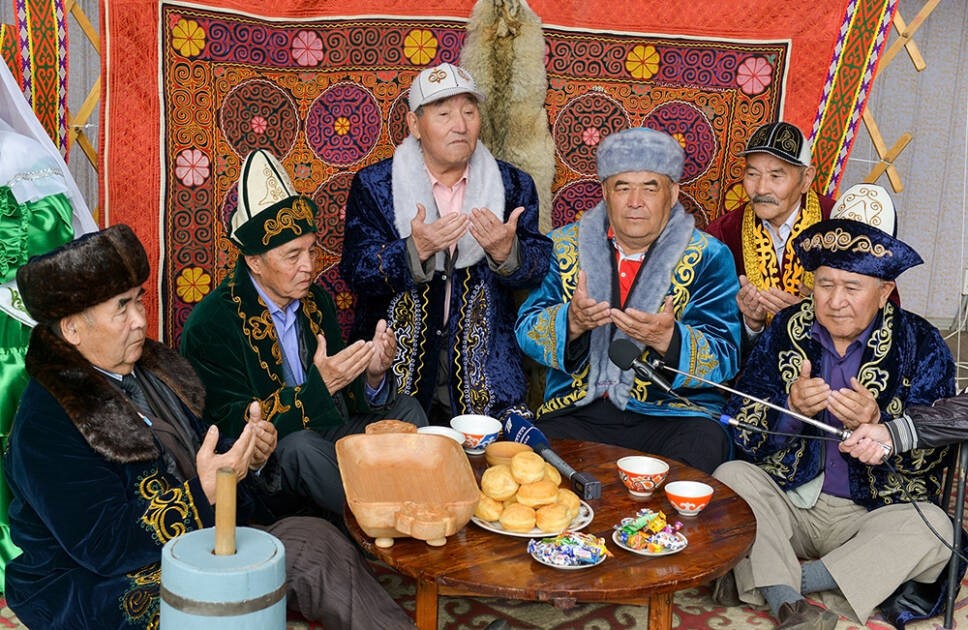
The dastarkhan (дастарқан) is the traditional spread of food and drink laid out on a low table or cloth for guests. It is not simply a meal but a statement of respect, generosity, and family honor. A proper dastarkhan includes:
- Bread (nan or baursak), always placed in the center, never turned upside down
- Tea, poured from a kettle by the youngest woman at the table, always into piala (handleless cups), filled only halfway (a full cup signals you should leave)
- Dried fruits and nuts (kuraga, zhangak, kishmish)
- Dairy products (kurt, irimshik, kaymak)
- Sweets and candies
- Main dishes, served later, with beshbarmak being the most honored dish
The head of the household or the most senior man carves and distributes the meat. Specific cuts carry meaning: the head of the sheep is offered to the most honored guest or eldest man, the pelvic bone (zhanbas) to senior women, and the shin bone (asykty zhilik) to younger guests.
Bata, The Blessing
Every significant meal or gathering ends with bata, a spoken blessing offered by the eldest person present. The bata thanks the host, blesses the family, and asks for prosperity and health. Guests raise both hands, palms upward, and draw them down over their faces after the blessing. This practice predates Islam in the steppe but has merged with Islamic prayer traditions over the centuries. For more on how Islam and pre-Islamic beliefs coexist in Kazakhstan, see our guide to religion in Kazakhstan.
Rules of Guest Behavior
Kazakh hospitality comes with unwritten expectations for guests:
- Remove shoes when entering a home
- Accept at least some food and tea (refusing is considered rude)
- Do not sit with your back to the elders or the door
- Do not stretch your legs toward others
- Thank the host and offer bata or kind words before leaving